

AI-generated abstract art with deep blue green waves flowing from left to right with a bright orange mesh pattern overlaid.

Altair® HyperWorks® 2026

Engineering at Scale — AI, Automation, and Performance for the Next Generation of Design

Altair® HyperWorks® 2026 extends the industry’s most comprehensive CAE design and simulation platform with powerful new capabilities across physics, high-performance computing (HPC), and artificial intelligence (AI). The latest release further unites physics solvers, multiphysics integration, and machine learning within one connected ecosystem. New breakthroughs in AI-powered modeling and visualization, automation, and real-time simulation empower engineers to explore more design options in less time, with confidence in accuracy and manufacturability. A connected digital thread, from concept to validation, ensures collaboration and traceability across the full product lifecycle.

ALTAIR COMMUNITY

Explore Altair HyperWorks 2026

Visit the Community to exchange ideas, browse the knowledge base, or get help from Altair experts.

Leading the Engineering User Experience

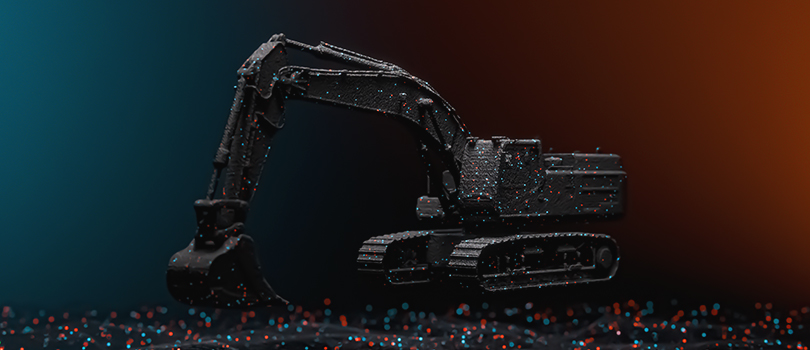
A rendering of an excavator vehicle with AI/data points scattered across it.

AI-Powered Design and Simulation

This release expands the role of AI across design and simulation, combining physics with machine learning speed. Generative design algorithms automatically explore optimal geometries, while predictive models accelerate decision-making with near-real-time feedback. Reduced order modeling (ROM) can now be run on GPUs for faster training of larger, more complex systems. An enterprise cloud solution leveraging geometric deep learning and on-demand HPC, enables teams to develop and deploy physics-based AI models in a secure, collaborative browser workspace, producing predictions up to 1,000x faster than traditional solvers without hardware constraints.

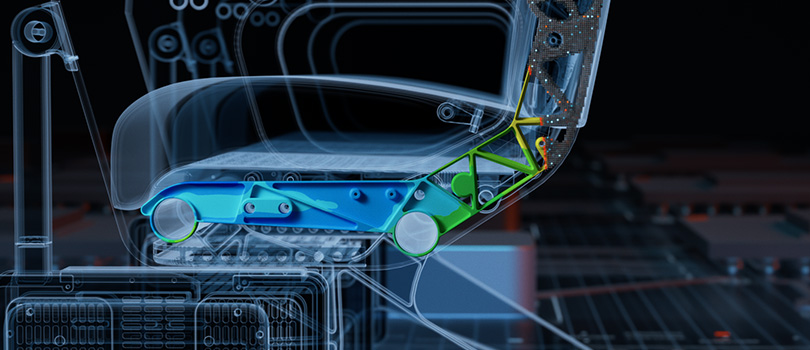
A simulation of an airplane-seat component is added to the digital thread, linking it to PLM/PDM systems and more.

Enterprise-Scale Pre-processing and Model Assembly

Performance improvements in pre-processing, particularly during model build and assembly, enable engineers to work confidently with the largest and most complex assemblies. These performance gains unlock new efficiencies in industries where speed and scale are critical, from automotive BIWs to aerospace structures and heavy equipment. Operations on production-scale models, such as box trim, move, split, undo/redo, and midsurface creation, are now dramatically faster, delivering smoother, near-instant workflows. Direct integration with PDM systems and batch meshing accelerates model assembly, while connector scenario management and representation controls ensure consistent mesh and connector standards across teams. Enhanced browsers and editors, including a new create entity dialog, attribute tables, and consolidated entity editor, streamline navigation and editing for complex assemblies.

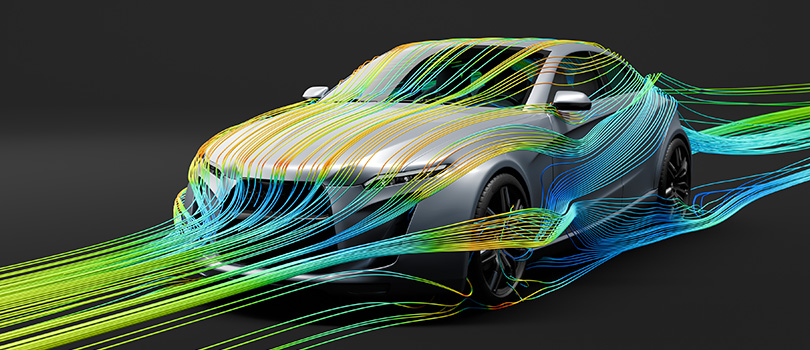
CFD simulation streamlines flowing across a vehicle.

Integrated Multiphysics Simulation

Multiphysics integration continues to advance across structural, electromagnetic, thermal, and fluid domains, enabling engineers to analyze coupled systems more efficiently. Improvements across solvers deliver higher accuracy, including new electromagnetic workflows for e-motor and busbar analysis, structural–acoustic optimization, and thermal–fluid coupling for high-temperature and battery safety studies. Expanded interoperability and co-simulation standards allow transient, nonlinear, and high-impact scenarios to run more consistently across domains, strengthening digital continuity from concept through validation.

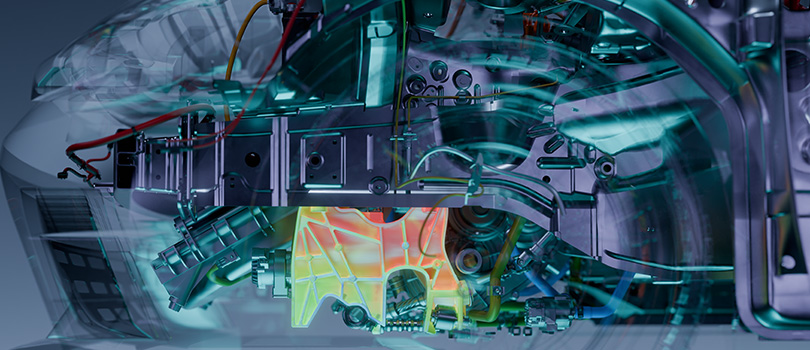
A cast manufacturing simulation component highlighted within a translucent rendering of a car chassis.

Automation, Collaboration, and Connectivity

Automation and customization continue to transform simulation into a faster, more collaborative process. Expanded Python and API support, along with intuitive no-code workflow tools, remove repetitive work and let engineers customize processes to their needs. Enhanced visualization and plotting make results easier to interpret and share, promoting collaboration across teams and disciplines. Seamless integration with cloud platforms, co-simulation standards, and third-party software keeps data consistent and connected. Together, these advances strengthen interoperability and digital-twin fidelity, creating a smarter, faster, and more scalable simulation ecosystem.

Altair HyperWorks 2026 Highlights: Engineering Without Limits

Faster Model Build and Assembly for Enterprise-Scale Simulation

Engineering teams can now handle large, complex assemblies with speed and fluidity, shortening build and validation cycles for enterprise-scale models.

  • Large and complex assemblies now load and update almost instantly, eliminating long waits during model preparation.
  • Model building, meshing, and connector creation are significantly faster, reducing setup time for detailed structures.
  • Integrated data management keeps models consistent with shared standards across teams and programs.
  • New navigation and editing tools maintain smooth performance even with massive assemblies.
icon-SCS_HW23

AI-Powered Simulation and Design Exploration

Intelligent modeling tools accelerate design exploration, enabling near-instant predictions and faster validation across structural, thermal, and multiphysics domains.

  • Generative algorithms automatically create and refine geometry, accelerating early design exploration.
  • GPU acceleration significantly reduces training time for ROMs.
  • Broader coverage enables AI-assisted predictions across more simulation domains such as vectors and smoothed-particle hydrodynamics (SPH).
  • Browser-based tools make it easy to generate data, train models, and deploy AI-driven simulations without installation.
icon-Twin-Activate_HW23

Integrated Multiphysics for Complex Systems

Unified solvers and domain coupling deliver faster, more accurate multiphysics simulations, improving reliability from early design through validation.

  • AI-guided acceleration improves solver performance and reduces iteration time across coupled physics workflows.
  • New optimization methods balance electromagnetic efficiency with mechanical durability for better motor and system design.
  • Reliability testing for electronics and batteries is faster and easier, with simplified setup and analysis.
  • Electromagnetic simulations run up to 40% faster, propagation modeling up to 20x faster, and radar and EMC analysis expanded for next-generation applications.
icon-Inspire_HW23

High-Fidelity Structural and Impact Analysis

Structural and impact analysis advances improve accuracy, speed, and correlation with real-world performance for high-fidelity models.

  • Automatic mesh refinement during topology optimization improves accuracy.
  • Expanded response-spectrum capabilities provide more detailed dynamic analysis and load prediction.
  • Broader compatibility with common crash models simplifies data exchange and reuse across projects.
  • New composite and foam material models deliver more realistic impact behavior and better test correlation.

Realistic Particle, Fluid, and Material Behavior

New modeling approaches capture the true behavior of bulk materials and particle interactions. Along with new manufacturing materials, this improves realism in safety and performance simulations.

  • Shape-based particle modeling more accurately captures bulk flow and packing behavior.
  • Python-based automation streamlines and customizes DEM workflows for faster iteration.
  • Coupled solvers enable advanced studies of high-temperature effects and battery safety.
icon-HyperMesh-CFD_HW23

Intuitive Design and Motion Exploration

Design exploration gains new flexibility with advanced visualization, comparison, and motion modeling tools.

  • Multi-window analysis enables direct, side-by-side comparison of multiple results for faster evaluation.
  • New implicit modeling and warp-map tools allow precise draping and adjustment of geometry directly on surfaces.
  • Solver results can now be saved in common formats, making it easier to train AI models or share data downstream.
  • Motion updates add expression-based inputs, modular assemblies, and mirrored systems for quicker setup and iteration.

Visit the Altair Community for additional details on what's new for each product included in the new CAE software release.


Build with Altair® HyperWorks: All-in-One Engineering Platform

Learn More